first published in NUVO newsweekly
Amy Speace
Indy Hostel
Monday, Oct. 23, 7 p.m.
$5
From playing at CATH coffeehouse to opening for Judy Collins, Amy Speace has come a long way in the last five years. CATH Inc., the acoustic venue at 54th Street and College Avenue that closed in September 2004, was the second stop on her first-ever tour. Speace has spent the past year as Judy Collins’ opening act and winning folk festival and songwriting awards. Her latest release, Songs For Bright Street, is on Collins’ Wildflower Records.
When asked about Judy Collins and Wildflower Records, Speace felt like she was giving a pageant contest answer: “It really has been a dream to open for Judy. She’s one of the first voices I remember from the radio … and she has always been that voice, so iconic.
“As a singer-songwriter working in a folk-based idiom, there are maybe a handful of artists that all want to hear us and nod their approval, and Judy is certainly in that group.”
Speace says that standing backstage listening to Collins sing is incredible. The first time she met Collins, she was distracted by the color of her eyes. Speace managed not to blurt out “Sweet Judy Blue Eyes” and instead greeted her with a very proper “nice to meet you, Ms. Collins.”
Songs For Bright Street is a great collection of Speace’s songwriting talents. Her music is pop-folk with a bit of alt-country tossed in. She will be performing that album and has promised some new songs.
Speace is looking forward to playing in the house concert intimacy of Indy Hostel and enjoying a good run on the Monon Trail.
For more information go to www.indyhostel.us or www.amyspeace.com
—Nora Spitznogle
Showing posts with label CATHcoffeehouse. Show all posts
Showing posts with label CATHcoffeehouse. Show all posts
Wednesday, October 18, 2006


Wednesday, June 21, 2006
Psychic rehearsals
Susan Cowsill returns to Indianapolis
by: Nora Spitznogle
first published in NUVO newsweekly
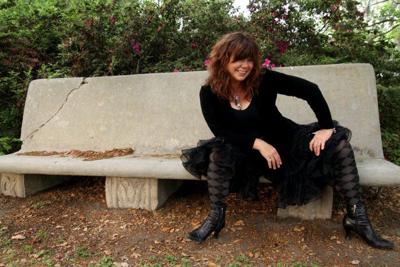
After Katrina, Susan Cowsill found Indianapolis a welcoming shelter. She took refuge here during the post-hurricane chaos of gathering her family and forming a plan for the future. She’s happy to be visiting this time under better circumstances.
Cowsill is the youngest member of the iconic pop family band The Cowsills. The Cowsills enjoyed great success in the late ’60s and early ’70s. She joined the band formed by her older brothers when she was 7 years old and was soon singing in front of thousands of fans, appearing on television shows and passing out a Grammy Award to Glen Campbell.
The Cowsills were offered a television series, but the producers had already cast the mother, so the family declined. The show? The Partridge Family.
The Cowsills disbanded in the early ’70s. The boys had grown up, and the constant touring had taken a toll on the family finances. There were a couple of reincarnations of The Cowsills over the years, and they have reunited for a few concerts. All of the family continued to perform in various bands and solo projects.
Susan Cowsill joined up with Vicki Peterson of The Bangles in 1991 and they played as the Psycho Sisters. Cowsill and Peterson became permanent members of the Continental Drifters the following year. The band eventually moved from Los Angeles to New Orleans, and Cowsill spent the next 10 years with the band, touring extensively, recording several critically acclaimed albums, winning awards and starting a family. Cowsill and her husband, Continental Drifters drummer Russ Broussard, left the band in 2002.
And so began her solo career. Her songs are introspective and full of history. The beautiful “Crescent City Snow” was recorded this year, just one of the songs she says are lined up, patiently waiting to be finished. The song is full of hope for New Orleans, recalling good memories and fun times. It also includes a favorite joke: “I can tell you where you got those shoes.” I guess the Broad Ripple bridge kids didn’t make that up. Her record, Just Believe It, was released in Europe in 2004 and in the U.S. Oct. 11 of last year, after the hurricane.
Which brought her to Indianapolis.
She and her husband were able to reconnect with their daughter in Nashville, Tenn., and they made Indianapolis the next stop on “the ol’ evacuation tour.” Their friend Tim Cohn took them in and held an impromptu concert to generate money for them until they could access their bank accounts. It was an amazing and emotional show. Peter Hosapple joined Cowsill and Broussard for several songs. It was the first time they had performed together since the breakup of the Drifters.
Cowsill and Broussard are now back in “beautiful, soulful, limpin’-along-like-a-dog-that-got-hit-by-a-car New Orleans. But we’re putting a REALLY big cast on it.” They are leaving their beloved town for a two-month tour of the Midwest and East Coast.
The Susan Cowsill touring band is made up of her husband along with Indianapolis favorites Tad Armstrong and Aaron Stroup. Armstrong and Stroup most recently played together in the band Middletown. Armstrong is squeezing the tour in between gigs with his current band, The Benders. Stroup relocated to Austin, Texas, last year and has spent the last eight months working in a New Orleans relief kitchen. Cowsill says that she, Armstrong and Stroup have been holding “psychic rehearsals.” Indianapolis is the third stop on their tour, so they should be in perfect form by then.
by: Nora Spitznogle
first published in NUVO newsweekly
After Katrina, Susan Cowsill found Indianapolis a welcoming shelter. She took refuge here during the post-hurricane chaos of gathering her family and forming a plan for the future. She’s happy to be visiting this time under better circumstances.
Cowsill is the youngest member of the iconic pop family band The Cowsills. The Cowsills enjoyed great success in the late ’60s and early ’70s. She joined the band formed by her older brothers when she was 7 years old and was soon singing in front of thousands of fans, appearing on television shows and passing out a Grammy Award to Glen Campbell.
The Cowsills were offered a television series, but the producers had already cast the mother, so the family declined. The show? The Partridge Family.
The Cowsills disbanded in the early ’70s. The boys had grown up, and the constant touring had taken a toll on the family finances. There were a couple of reincarnations of The Cowsills over the years, and they have reunited for a few concerts. All of the family continued to perform in various bands and solo projects.
Susan Cowsill joined up with Vicki Peterson of The Bangles in 1991 and they played as the Psycho Sisters. Cowsill and Peterson became permanent members of the Continental Drifters the following year. The band eventually moved from Los Angeles to New Orleans, and Cowsill spent the next 10 years with the band, touring extensively, recording several critically acclaimed albums, winning awards and starting a family. Cowsill and her husband, Continental Drifters drummer Russ Broussard, left the band in 2002.
And so began her solo career. Her songs are introspective and full of history. The beautiful “Crescent City Snow” was recorded this year, just one of the songs she says are lined up, patiently waiting to be finished. The song is full of hope for New Orleans, recalling good memories and fun times. It also includes a favorite joke: “I can tell you where you got those shoes.” I guess the Broad Ripple bridge kids didn’t make that up. Her record, Just Believe It, was released in Europe in 2004 and in the U.S. Oct. 11 of last year, after the hurricane.
Which brought her to Indianapolis.
She and her husband were able to reconnect with their daughter in Nashville, Tenn., and they made Indianapolis the next stop on “the ol’ evacuation tour.” Their friend Tim Cohn took them in and held an impromptu concert to generate money for them until they could access their bank accounts. It was an amazing and emotional show. Peter Hosapple joined Cowsill and Broussard for several songs. It was the first time they had performed together since the breakup of the Drifters.
Cowsill and Broussard are now back in “beautiful, soulful, limpin’-along-like-a-dog-that-got-hit-by-a-car New Orleans. But we’re putting a REALLY big cast on it.” They are leaving their beloved town for a two-month tour of the Midwest and East Coast.
The Susan Cowsill touring band is made up of her husband along with Indianapolis favorites Tad Armstrong and Aaron Stroup. Armstrong and Stroup most recently played together in the band Middletown. Armstrong is squeezing the tour in between gigs with his current band, The Benders. Stroup relocated to Austin, Texas, last year and has spent the last eight months working in a New Orleans relief kitchen. Cowsill says that she, Armstrong and Stroup have been holding “psychic rehearsals.” Indianapolis is the third stop on their tour, so they should be in perfect form by then.
Wednesday, March 02, 2005
Changing times for acoustic performers
Venues scramble to fill void left by Cath
by: Paul F. P. Pogue Mar 2, 2005 0
first published in NUVO newsweekly
It's one of the oldest forms of entertainment: the traveling minstrel, a singer/songwriter with nothing but a guitar and a voice, going from place to place singing for his supper. In an age of Internet downloads and stage spectacle, the art of the singer/songwriter remains alive and vibrant in Indianapolis. Mieka Pauley performs at the Abbey Coffeehouse, one of many venues now supporting the singer/songwriter scene in Indianapolis.
For several years, Nora Spitznogle, booking shows at the Cath Coffeehouse in Broad Ripple, was the godmother of the scene. In the wake of Cath's closing last year, the scene has spread out among a wide array of venues. Boulevard Place, the Abbey Coffeehouse, IndyIndie.com, Vic's Coffeehouse, Indy Hostel and Out Word Bound are only a few of the places picking up the slack, and even venues such as the Music Mill are getting into the act, booking performers like Melissa Ferrick.
Robin Coleman, who booked shows for Indy's Music House before it closed down late last year, now books acts through her new site, segmentofsociety.com.
"You've just got to know where to look to find stuff like that," Coleman said. "Ever since Cath closed, a lot of us really stepped up to the plate and have carried on the Cath tradition. They loved Nora in Chicago. Cath became a real weigh station. You weren't necessarily going to make hundreds of dollars, but it was a place to break in and gain new fans. I would go just to find new music. A lot of times people get in their familiar zone of who they like to listen to. Most of the time independent artists, you're either going to pay nothing to go see them or very low cover charge, and you can't beat that. And to me a lot of times the music is better."
Coleman said that the various promoters are forming a strong bond and network with each other, helping each other line up and cross-promote shows, as well as communicating with each other to find venues when one of them gets an offer that they can't fit into their own schedule.
"It's really exciting," she said. "Sometimes I feel like the kid in Almost Famous. I wouldn't mind continuing this as long as I'm able and can keep my sanity about myself. I think there'll always be room for stuff like this, because you'll always have the indie scene. You'll always have kids coming up. It's a never-ending pot of gold. It's where everybody starts out. Stuff like American Idol makes me mad, because it's mass-produced entertainment. That's why there's independent artists out there. They're people who want to do their own."
Cathy Schneider and Joyce Walker, who operate IndyIndie.com and book acts at their neighborhood clubhouse as well as Out Word Bound, started up their work in order to give a stage to female artists such as Michelle Malone, Aerin Tedesco and Andrea Bunch.
"At the time there was no place in Indianapolis for independent female musicians to play," Walker said. "There's a lot of really good little groups out there and no stage for them to be on. And it's really about women's community. We can't seem to sustain a meeting place. We had Utopia, we had a few places in the past, and they just go by the wayside.
"It's to keep the culture alive, keep the art alive," Schneider said. "We're in a Republican situation right now, and art is the first thing that suffers. This is our way of supporting art and keeping it alive. I want people 30 years younger than me to understand."
Tammara Tracy works with Schneider and Walker to coordinate the "Music in the Stacks" biweekly series of shows at Out Word Bound book store.
"The frustration that I heard from many performers saying that there wasn't anyplace to perform," Tracy said. "IndyIndie is a monthly gig, and there are so many other traveling musicians that needed a place. And capitalizing on Indianapolis' geographic location, as being the crossroads as the musicians are traveling the country, they need gas money and stuff like that. I'm hoping to contribute to the viability of the independent musician, and I'm hoping to introduce their music to more and more people."
John Newton promotes frequent events in the intimate living-room setting of the Indy Hostel (Indyhostel.us), including a recent appearance by Jason Wilber and an upcoming series of Sunday afternoon classical performances at 1 p.m. every Sunday from March 13 through all of April.
"These house parties, it's really a different scene. It's more relaxed, people have a good time. I don't make a lot of money out of them, sometimes I lose money, but it gets the place's name out there," Newton said. "Jason Wilber was a standing-room only crowd. Everyone enjoyed it, it was a wonderful show, it was low-key, smoke-free, lot of good food, good drinks. A lot of people made new friends. Another neat thing about a house party is kids can come. I can have high school students visit that are into music and gain admission because there's no age limit."
Spitznogle herself continues to promote the occasional show and a monthly series at the Harrison Center. She also runs an information hub of singer/songwriter events at her Web site, queenbeemusic.com.
by: Paul F. P. Pogue Mar 2, 2005 0
first published in NUVO newsweekly
It's one of the oldest forms of entertainment: the traveling minstrel, a singer/songwriter with nothing but a guitar and a voice, going from place to place singing for his supper. In an age of Internet downloads and stage spectacle, the art of the singer/songwriter remains alive and vibrant in Indianapolis. Mieka Pauley performs at the Abbey Coffeehouse, one of many venues now supporting the singer/songwriter scene in Indianapolis.
For several years, Nora Spitznogle, booking shows at the Cath Coffeehouse in Broad Ripple, was the godmother of the scene. In the wake of Cath's closing last year, the scene has spread out among a wide array of venues. Boulevard Place, the Abbey Coffeehouse, IndyIndie.com, Vic's Coffeehouse, Indy Hostel and Out Word Bound are only a few of the places picking up the slack, and even venues such as the Music Mill are getting into the act, booking performers like Melissa Ferrick.
Robin Coleman, who booked shows for Indy's Music House before it closed down late last year, now books acts through her new site, segmentofsociety.com.
"You've just got to know where to look to find stuff like that," Coleman said. "Ever since Cath closed, a lot of us really stepped up to the plate and have carried on the Cath tradition. They loved Nora in Chicago. Cath became a real weigh station. You weren't necessarily going to make hundreds of dollars, but it was a place to break in and gain new fans. I would go just to find new music. A lot of times people get in their familiar zone of who they like to listen to. Most of the time independent artists, you're either going to pay nothing to go see them or very low cover charge, and you can't beat that. And to me a lot of times the music is better."
Coleman said that the various promoters are forming a strong bond and network with each other, helping each other line up and cross-promote shows, as well as communicating with each other to find venues when one of them gets an offer that they can't fit into their own schedule.
"It's really exciting," she said. "Sometimes I feel like the kid in Almost Famous. I wouldn't mind continuing this as long as I'm able and can keep my sanity about myself. I think there'll always be room for stuff like this, because you'll always have the indie scene. You'll always have kids coming up. It's a never-ending pot of gold. It's where everybody starts out. Stuff like American Idol makes me mad, because it's mass-produced entertainment. That's why there's independent artists out there. They're people who want to do their own."
Cathy Schneider and Joyce Walker, who operate IndyIndie.com and book acts at their neighborhood clubhouse as well as Out Word Bound, started up their work in order to give a stage to female artists such as Michelle Malone, Aerin Tedesco and Andrea Bunch.
"At the time there was no place in Indianapolis for independent female musicians to play," Walker said. "There's a lot of really good little groups out there and no stage for them to be on. And it's really about women's community. We can't seem to sustain a meeting place. We had Utopia, we had a few places in the past, and they just go by the wayside.
"It's to keep the culture alive, keep the art alive," Schneider said. "We're in a Republican situation right now, and art is the first thing that suffers. This is our way of supporting art and keeping it alive. I want people 30 years younger than me to understand."
Tammara Tracy works with Schneider and Walker to coordinate the "Music in the Stacks" biweekly series of shows at Out Word Bound book store.
"The frustration that I heard from many performers saying that there wasn't anyplace to perform," Tracy said. "IndyIndie is a monthly gig, and there are so many other traveling musicians that needed a place. And capitalizing on Indianapolis' geographic location, as being the crossroads as the musicians are traveling the country, they need gas money and stuff like that. I'm hoping to contribute to the viability of the independent musician, and I'm hoping to introduce their music to more and more people."
John Newton promotes frequent events in the intimate living-room setting of the Indy Hostel (Indyhostel.us), including a recent appearance by Jason Wilber and an upcoming series of Sunday afternoon classical performances at 1 p.m. every Sunday from March 13 through all of April.
"These house parties, it's really a different scene. It's more relaxed, people have a good time. I don't make a lot of money out of them, sometimes I lose money, but it gets the place's name out there," Newton said. "Jason Wilber was a standing-room only crowd. Everyone enjoyed it, it was a wonderful show, it was low-key, smoke-free, lot of good food, good drinks. A lot of people made new friends. Another neat thing about a house party is kids can come. I can have high school students visit that are into music and gain admission because there's no age limit."
Spitznogle herself continues to promote the occasional show and a monthly series at the Harrison Center. She also runs an information hub of singer/songwriter events at her Web site, queenbeemusic.com.
Wednesday, May 19, 2004
Fair Trade
Fair trade
Creating a market for Third World farmers
First published in NUVO newsweekly
by: Nicholas Jaqua May 19, 2004
In recent years, the global price for coffee has been at an all-time low, resulting in desperate circumstances for small Third World farmers and plantation workers. Luckily, the rising tides of gourmet coffee drinkers in America can help by choosing fair trade coffee.
How can we help?
14,000 investment offices open virtually, so we’re ready to help no matter where you are.
The fair trade designation guarantees that farmers receive a fair price for growing and harvesting their crop. Indianapolis coffee shops and grocery stores have only recently noticed a demand.
Nora Spitznogle, general manager of CATH, said that they have been selling fair trade beans for several years, but only in the past few months have customers been asking for it by the cup.
“I wish everything could be fair trade,” she said. Spitznogle said that they brew five different coffees per day, and she is considering making one of them fair trade. She is also looking into making their house blend fair trade.
Based in Oakland, Calif., TransFair USA and its partners are responsible for certifying fair trade coffee. Their label guarantees that importers paid a minimum price of $1.26 per pound ($1.41 for certified organic) and helped finance production costs. TransFair USA also certifies tea, cocoa and fresh fruit.
According to the TransFair USA Web site, conventional coffee supplies are controlled by large producers and transnational corporations who reap profits while paying plantation workers and small farmers next to nothing. Fair trade cooperatives help farmers bypass conventional supply. Cooperatives also reinvest in the communities, building schools and improving health care.
“To me this is a social justice issue,” said Greg Foote, a retired high school English teacher from Indianapolis. He became interested in fair trade through friends and family who know people in Nicaragua.
Foote hopes the market for fair trade will grow in Indianapolis, and as a concerned consumer he has been spreading the word to coffee retailers. Being a good neighbor, he said, and giving farmers the opportunity to make a decent living is what fair trade is about.
The Monon Coffee Co. in Broad Ripple always has one fair trade coffee on its brew bar, said owner William Powell. Fair trade is the way things should be, he said, but not all varieties are available with the designation.
Support Local Writers
They receive 100% of your donation. NUVO is a 501(c)3 nonprofit
“There are some countries that don’t have fair trade growing situations,” he said, “and, in order to get the whole breadth of coffees from around the world, it’s difficult to get everything fair trade.”
For some gourmet shops, bean quality is the most important thing. Mary Johanns, owner of the Stanton Coffee Co., a local coffee roaster, said that the coffee they purchase is sometimes fair trade but not always.
“When we purchase coffee we don’t look at it as being just fair trade,” she said. “We try to get the best coffee out there.” Specialty grade coffees are sold at a premium, Johanns said, and, in some situations, farmers are being paid more even if it’s not designated fair trade.
Lee Granger, owner of The Coffee Corner, always has fair trade beans for sale, but what they offer by the cup varies from day to day. For many customers, she said, fair trade is a selling point.
“Some people will go to certain coffeehouses because they know there’s fair trade there,” she said. Growing coffee is a lot like wine, Granger added, and farmers’ lives are interwoven with the coffee they produce, so helping farmers is always beneficial.
A coffee’s origin — who produces it and how — can be difficult to determine. The best way for consumers to know coffee is fair trade is to look for the label or ask the person behind the counter. The majority of fair trade coffee — 85 percent — is also certified organic.
Kroger, Trader Joe’s, The Good Earth in Broad Ripple and Wild Oats in Nora sell varieties of fair trade certified coffee. Wild Oats also stocks fair trade bananas and will soon have fair trade pineapples. Global Gifts on 86th Street sells coffee and a variety of other fair trade goods, including clothing, soap and pottery.
Some churches have also begun to serve fair trade after or before services. St Paul’s Episcopalian Church recently ran an ad in NUVO, offering a “free cup of fair trade coffee” on Sundays.
Fair trade coffee is more expensive. CATH’s Spitznogle said that it generally runs about a dollar more per pound. The increased cost per cup is only a few cents. So, for only pocket change, coffee drinkers can help create a viable market for hard-working Third World farmers.
Creating a market for Third World farmers
First published in NUVO newsweekly
by: Nicholas Jaqua May 19, 2004
In recent years, the global price for coffee has been at an all-time low, resulting in desperate circumstances for small Third World farmers and plantation workers. Luckily, the rising tides of gourmet coffee drinkers in America can help by choosing fair trade coffee.
How can we help?
14,000 investment offices open virtually, so we’re ready to help no matter where you are.
The fair trade designation guarantees that farmers receive a fair price for growing and harvesting their crop. Indianapolis coffee shops and grocery stores have only recently noticed a demand.
Nora Spitznogle, general manager of CATH, said that they have been selling fair trade beans for several years, but only in the past few months have customers been asking for it by the cup.
“I wish everything could be fair trade,” she said. Spitznogle said that they brew five different coffees per day, and she is considering making one of them fair trade. She is also looking into making their house blend fair trade.
Based in Oakland, Calif., TransFair USA and its partners are responsible for certifying fair trade coffee. Their label guarantees that importers paid a minimum price of $1.26 per pound ($1.41 for certified organic) and helped finance production costs. TransFair USA also certifies tea, cocoa and fresh fruit.
According to the TransFair USA Web site, conventional coffee supplies are controlled by large producers and transnational corporations who reap profits while paying plantation workers and small farmers next to nothing. Fair trade cooperatives help farmers bypass conventional supply. Cooperatives also reinvest in the communities, building schools and improving health care.
“To me this is a social justice issue,” said Greg Foote, a retired high school English teacher from Indianapolis. He became interested in fair trade through friends and family who know people in Nicaragua.
Foote hopes the market for fair trade will grow in Indianapolis, and as a concerned consumer he has been spreading the word to coffee retailers. Being a good neighbor, he said, and giving farmers the opportunity to make a decent living is what fair trade is about.
The Monon Coffee Co. in Broad Ripple always has one fair trade coffee on its brew bar, said owner William Powell. Fair trade is the way things should be, he said, but not all varieties are available with the designation.
Support Local Writers
They receive 100% of your donation. NUVO is a 501(c)3 nonprofit
“There are some countries that don’t have fair trade growing situations,” he said, “and, in order to get the whole breadth of coffees from around the world, it’s difficult to get everything fair trade.”
For some gourmet shops, bean quality is the most important thing. Mary Johanns, owner of the Stanton Coffee Co., a local coffee roaster, said that the coffee they purchase is sometimes fair trade but not always.
“When we purchase coffee we don’t look at it as being just fair trade,” she said. “We try to get the best coffee out there.” Specialty grade coffees are sold at a premium, Johanns said, and, in some situations, farmers are being paid more even if it’s not designated fair trade.
Lee Granger, owner of The Coffee Corner, always has fair trade beans for sale, but what they offer by the cup varies from day to day. For many customers, she said, fair trade is a selling point.
“Some people will go to certain coffeehouses because they know there’s fair trade there,” she said. Growing coffee is a lot like wine, Granger added, and farmers’ lives are interwoven with the coffee they produce, so helping farmers is always beneficial.
A coffee’s origin — who produces it and how — can be difficult to determine. The best way for consumers to know coffee is fair trade is to look for the label or ask the person behind the counter. The majority of fair trade coffee — 85 percent — is also certified organic.
Kroger, Trader Joe’s, The Good Earth in Broad Ripple and Wild Oats in Nora sell varieties of fair trade certified coffee. Wild Oats also stocks fair trade bananas and will soon have fair trade pineapples. Global Gifts on 86th Street sells coffee and a variety of other fair trade goods, including clothing, soap and pottery.
Some churches have also begun to serve fair trade after or before services. St Paul’s Episcopalian Church recently ran an ad in NUVO, offering a “free cup of fair trade coffee” on Sundays.
Fair trade coffee is more expensive. CATH’s Spitznogle said that it generally runs about a dollar more per pound. The increased cost per cup is only a few cents. So, for only pocket change, coffee drinkers can help create a viable market for hard-working Third World farmers.
Wednesday, February 11, 2004
Speakeasy: Q & A with Nora Spitznogle
first published in NUVO newsweekly February 11, 2004
Speakeasy: Q&A with Nora Spitznogle
Subscribe to:
Posts (Atom)